Playing With What Remains
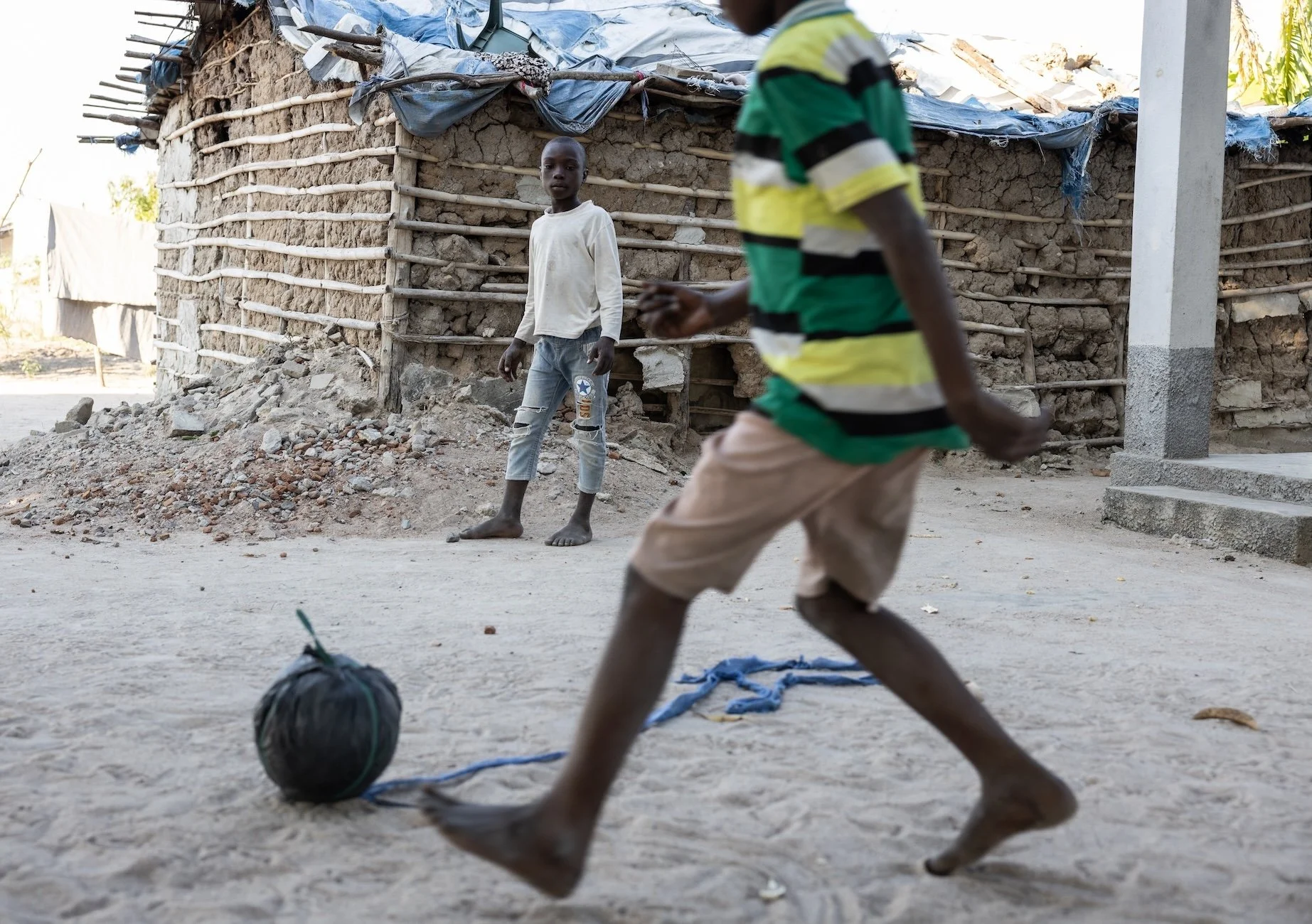
Balamati, 11 years old, sits on a football field in Mahate, Pemba, holding in his hands a makeshift ball he crafted from plastic, string, and an inflated condom.
In Mozambique, football is a language shared by all children. Yet in communities marked by extreme poverty, displacement, and prolonged crises, access to even basic toys is often limited. In these contexts, children improvise.
They collect condoms, usually unused ones distributed freely as part of HIV prevention programs, inflate them, tie them with raffia or string, and wrap them in plastic bags or cloth until the object can roll, bounce, and survive another match. This practice has been observed across several provinces, where scarcity fuels inventiveness and necessity gives rise to play.
The images in this series were taken in displacement-affected areas of Cabo Delgado. Violence in northern Mozambique, compounded by cyclones, floods, and recurring droughts, has forced hundreds of thousands of people to flee their homes. For children, displacement disrupts daily life, interrupts education, limits access to safe spaces, and reshapes how and where play can exist.
Rather than seeking to shock or romanticize resilience, this work observes a quiet intersection between public health and childhood play. The improvised football becomes both an object of necessity and a marker of vulnerability, raising questions about access, dignity, and the cost of growing up in places where play must be created from what remains.